I sat on this for a while. Nobody really wants to talk about the shortcomings of something they spend years, money, and a lot of emotional energy loving. Then another Golden we know developed cancer far too young, and I could not stop turning over the things I wish were different about this breed.
Golden Retrievers are still the breed I love. We live with them, train them, hunt over them, and breed them. That is exactly why I think we should be willing to talk about the places where we can do better.
This is not a list of reasons to give up on Goldens. It is also not a claim that our program has solved Golden Retriever health problems. Biology is messy. Responsible breeders can make better decisions. They cannot issue guarantees.
Cancer has become part of loving a Golden Retriever
If you stay in Goldens long enough, cancer stops being a distant statistic and starts being a name. A dog you trained. A dog a friend kept. A dog that still looked fine on Monday.
The line you hear most often is that about 60% of Golden Retrievers die of cancer. That number did not come from nowhere, and it is not a simple breed-wide death rate. A 1998 Golden Retriever Club of America health survey found cancer as the reported cause in 61% of the deaths owners described. A 2018 necropsy study led by Kent and colleagues found cancer as the attributed cause in 65% of 652 Goldens at a U.S. veterinary academic hospital. That is a referral population, not a random sample. Kennel-club and insurance studies from the U.K. and Scandinavia have reported lower figures, often 20% to 39%. The honest version: cancer is a defining Golden Retriever health problem, especially in U.S. data, and the exact percentage depends on who is being counted.
The Morris Animal Foundation Golden Retriever Lifetime Study has followed more than 3,000 Goldens since 2012. As that cohort has aged, cancer has been the leading cause of death among the dogs that have died. Hemangiosarcoma and lymphoma show up most. That does not mean every Golden is destined for those diagnoses. It means the breed carries a serious, complicated risk. We have written separately about hemangiosarcoma because we have lived it. A dog can look like itself until the day it does not.
Cancer risk is not one gene and one villain. Genetics matter. So do age, environment, body condition, reproductive history, and luck. A 2015 PLOS Genetics study found shared risk regions for lymphoma and hemangiosarcoma in Goldens, and those regions still explained only part of the risk. There is no DNA test that can tell you a dog will or will not get cancer. We can test for some inherited diseases. We cannot barcode a Golden for hemangiosarcoma and then relax. What we can do is pay attention to longevity and cause of death in a pedigree, keep dogs lean, support the research, and stay honest when a line shows a pattern. Even that is imperfect. Pedigrees are missing chapters. And in a breed where cancer is already common, a few cancer names in five generations is not, by itself, a diagnosis of the whole family.
We have essentially created two different Golden Retrievers
Walk into a hunt test one weekend and a conformation ring the next, and you can be forgiven for wondering whether you are looking at the same breed. The dogs can differ in structure, coat, size, athleticism, energy, and how badly they want to pick something up and bring it back.
That split happened because people selected for different things. Field-bred and performance Goldens have been pushed toward marking, retrieving desire, trainability, and the physical efficiency to work. Show-oriented Goldens have been pushed toward a particular silhouette, coat, and breed type in the ring. I am not going to pretend one side is automatically good and the other is automatically bad. Plenty of conformation breeders care deeply about health and temperament. Plenty of field breeders have produced dogs that are too much dog for a normal house.
Function used to be the point
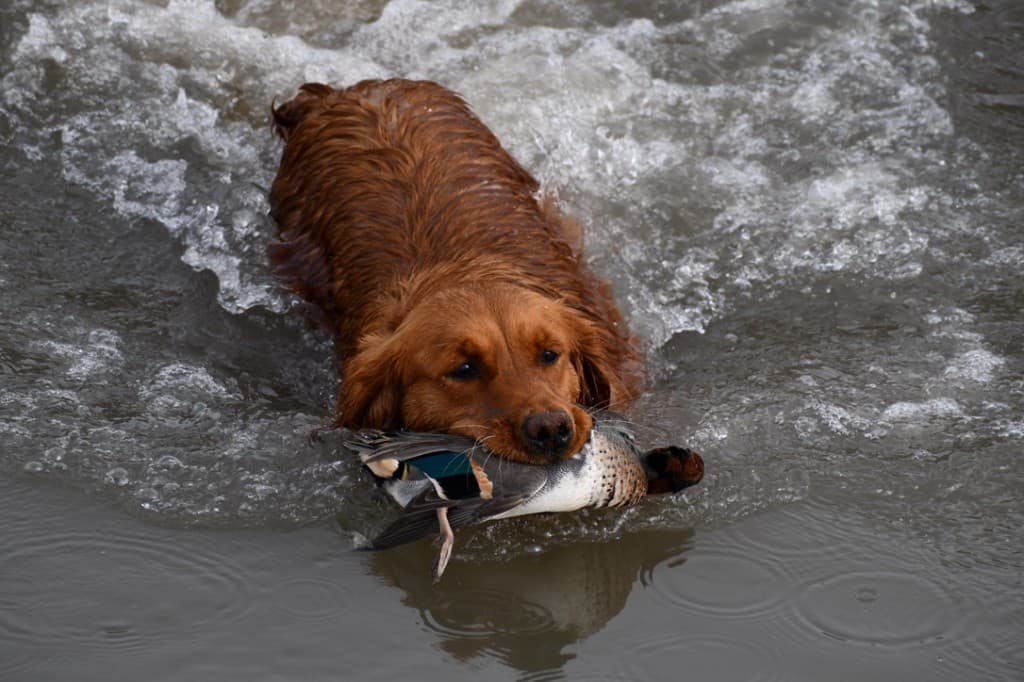
The Golden Retriever was developed as a working retriever. The AKC standard still says the breed is primarily a hunting dog and should be shown in hard working condition. A retriever that cannot retrieve is not a slight variation on the theme. We have written more about what field-bred Golden Retrievers actually are, and why not every Golden hunts even though the breed was built for that work.
The danger sits at both extremes
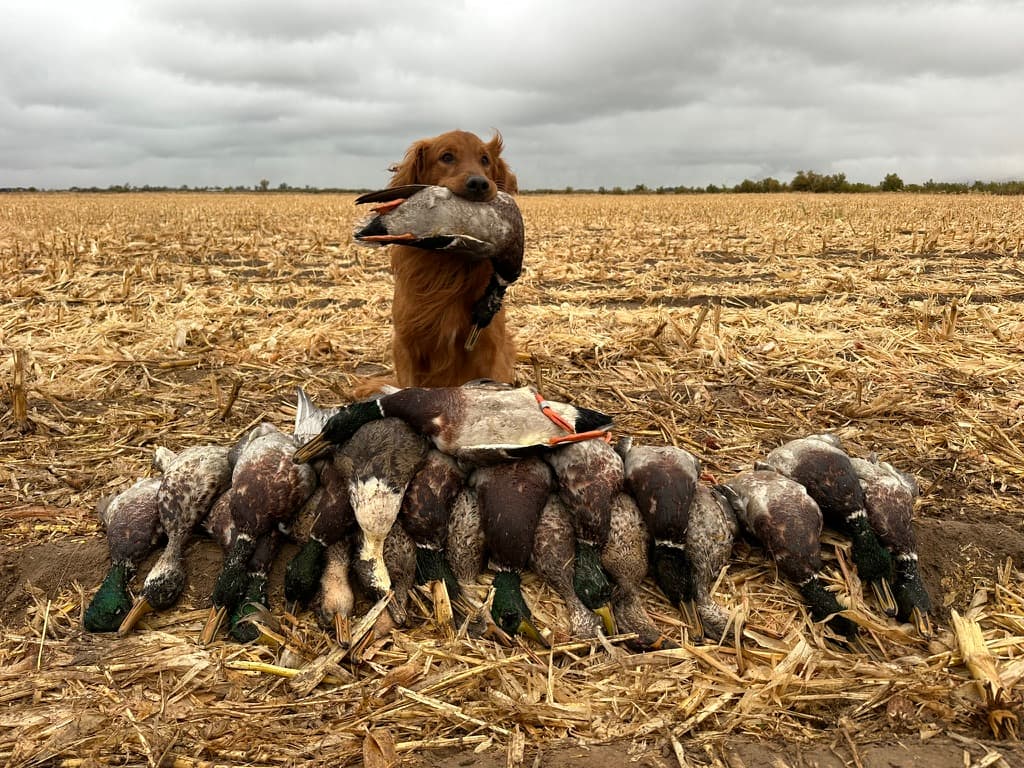
Breed only for appearance long enough, and working ability, athleticism, and a practical coat become secondary. Breed only for drive and performance long enough, and you can get a talented dog that is too aroused, too intense, or too short on off-switch for an ordinary family. More drive is not automatically better. The Golden I want in the next generation is not a mascot and not a rocket with fur. It is a functional dog with health, structure, trainability, athleticism, a livable temperament, and enough working instinct to still resemble the job the breed was created for.
Instinct is not a title
Instinct is the dog that wants the bird, marks the fall, and keeps trying when the retrieve gets hard. Trainability is whether that dog will take direction. Formal training shapes those things. Field titles are evidence that a dog reached a standard on a given set of days. Not every Golden needs to hunt. Pet homes are not a lesser destination. Breeders should still care whether we are preserving the traits that historically defined the breed. You can love a family Golden and still want the breed to remember it is a retriever.
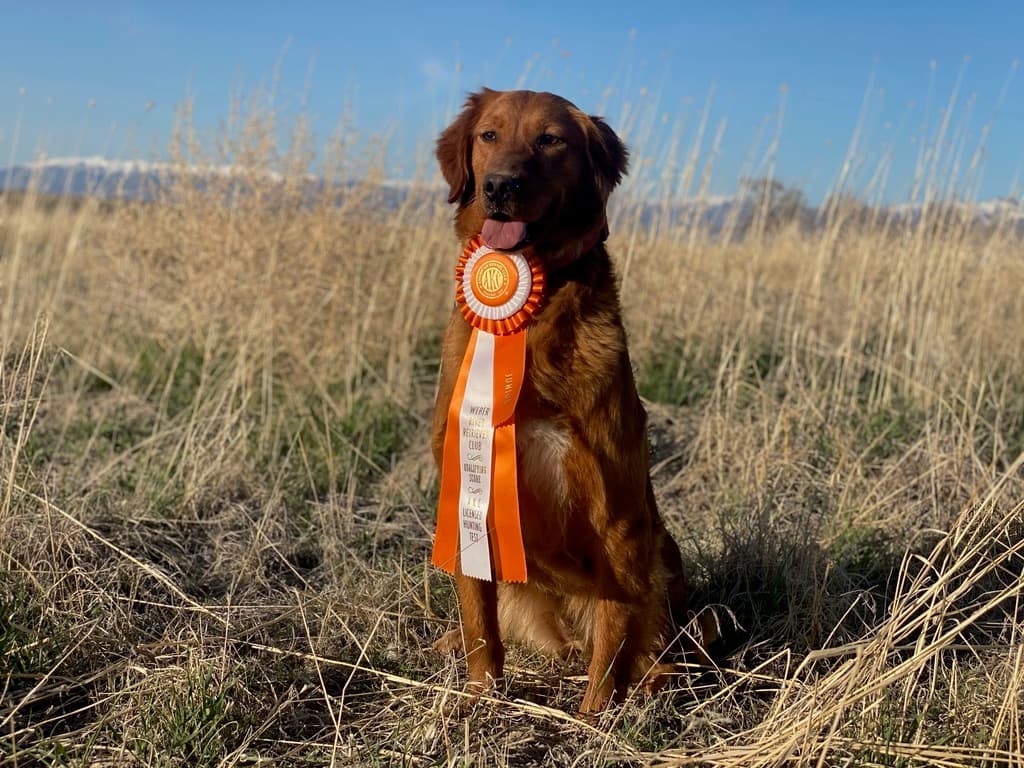
Athleticism belongs here too. Some Goldens have lost the frame and stamina the breed was created to have. Some of that is genetics. Some of it is lifestyle. A heavy coat can hide extra weight, and a soft routine can leave a well-built dog unready for work. I am not interested in criticizing individual dogs. I am interested in whether we still treat an athletic, efficient Golden as normal. Field breeders do not talk enough about the other end. We have written about that in Are Field-Bred Golden Retrievers Too Hyper?. A good working retriever should still be able to live in a house: biddable, environmentally stable, able to come off the gas. If the only dogs that can run a program are too hot for an active family, the program has a problem.
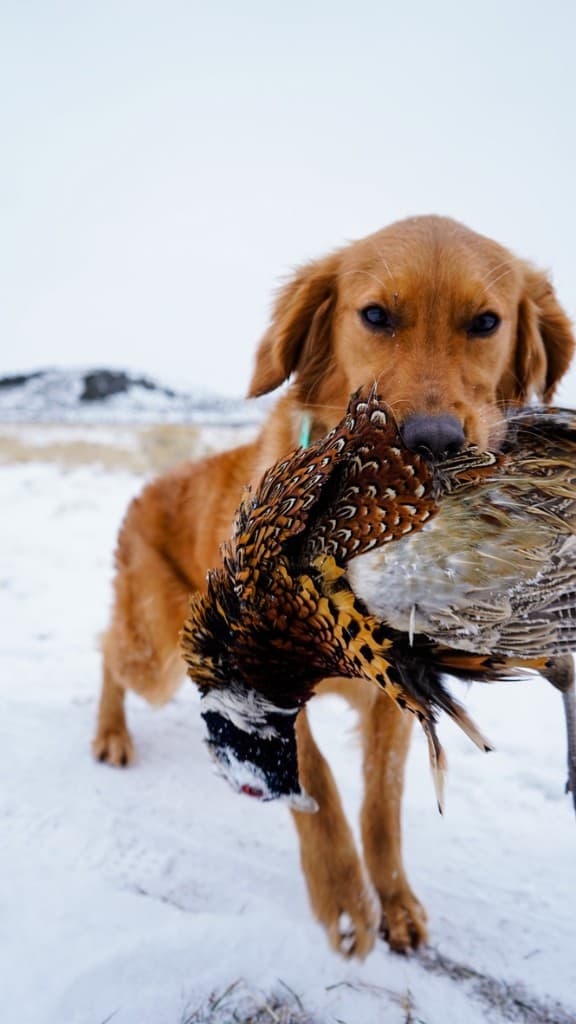
Color is not a breeding program
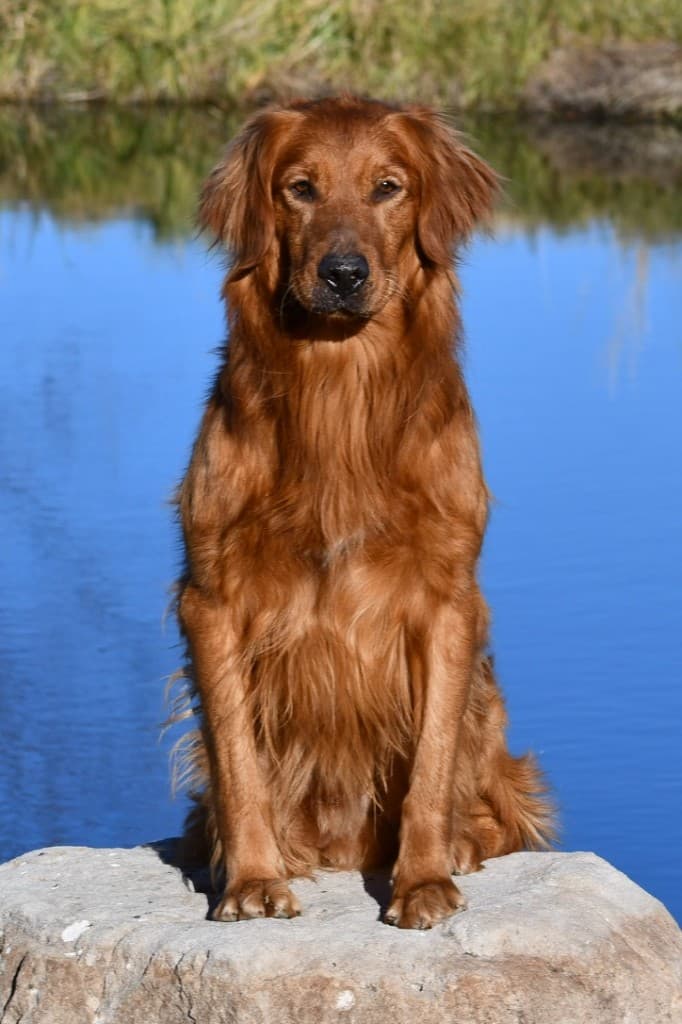
Golden Retriever color lives on a spectrum. Light cream to deep red is normal variation, not a personality type and not a health clearance. We have lighter dogs and darker dogs. We have never seen a shade retrieve a bird. The problem is not that people like a certain color. The problem is when English cream or a very dark red becomes the headline, and health clearances, pedigree, longevity, temperament, structure, genetic diversity, and working ability get treated like fine print. Color is easy to photograph. Longevity is not.
A heavy coat has made extra weight look normal
A Golden in a full coat can look plush when it is simply fat. Ribs disappear, then the waist, then the abdominal tuck. People call it a big Golden, as if mass were the same thing as substance. Extra weight loads joints, makes movement sloppy, and is hard on metabolic health. In a breed already dealing with orthopedic disease and cancer, body condition is one of the few levers an owner can actually hold. Feel for ribs under a thin layer of fat. Look from above for a waist. Look from the side for a tuck-up. If the dog is a smooth loaf from chest to hip, it is probably carrying too much.
The study people cite here is the Purina lifespan work by Kealy and colleagues in 2002. It followed 48 Labrador Retrievers, not Goldens. Littermates kept lean had a median lifespan of 13.0 years, compared with 11.2 years for their heavier pair-mates. That is Labrador evidence, not a Golden trial. It is still one of the clearest demonstrations we have that staying lean is associated with a longer life in a related retrieving breed.
Orthopedic problems are still here, even with all this testing
Hip dysplasia and elbow dysplasia have not left the breed. The Golden Retriever Club of America expects breeding dogs to have hip and elbow evaluations, cardiac exams, and ongoing eye exams. OFA and PennHIP are the names you will hear most. A CHIC number means the dog completed the parent club's protocol. It does not mean every result was perfect.
These diseases are polygenic: many genes, plus environment. Growth rate, body weight, and how a young dog is exercised all influence whether risk becomes a clinical problem. You cannot blood-test a dog for hip dysplasia. You can radiograph hips, keep the dog lean, and still produce an affected puppy from two parents with passing scores. A 2017 PLOS ONE study of OFA data across 60 breeds found that long-term selection on radiographs was associated with improvement. Testing is not theater. It is also not a warranty. Our health testing is the floor we stand on, not a promise that a puppy will never have a bad joint.
The itch that will not quit
Ask enough Golden owners about ears, paws, and hot spots, and you will start to wonder if the whole breed is allergic to being a dog. Recurrent skin and ear trouble is common. Atopic dermatitis, the inherited tendency to overreact to ordinary environmental allergens, is a big part of that. Dust mites, pollens, grasses. Food allergy is real. It is also less common than many owners assume, and it can look almost identical. Veterinary dermatology work from Olivry and colleagues keeps making the same point: a properly run elimination diet is how you diagnose food-responsive disease. A bag swap and a serum panel are not the same thing.
This is not purely genetic and not purely dietary. A 2011 Veterinary Dermatology paper on Labrador and Golden Retrievers looked at environmental contributions for a reason. There is no simple DNA test for most of these skin problems. If the same families keep producing itchy dogs with chronic ears, that belongs in the notes. You cannot select against a problem you refuse to track.
One popular sire can change a breed faster than we like to admit
This is the part of the conversation that has been living in Golden circles for decades, usually as a story about one dog.
After I shared a shorter version of this piece, someone remembered a document Jackie Mertens used to keep on the old Topbrass site. Jackie was one of the most influential field Golden breeders of the last fifty years, and she was not shy about pedigrees. The commenter remembered a hugely successful stud dog, call name Bear, showing up two, three, sometimes four times behind Goldens that later developed cancer.
I went looking. I could not find Jackie's original page. The old site is gone, and Jackie died in 2024. I also could not find a titled popular sire whose call name was Bear that matches that story. The dog people usually mean is BISS Am/Can CH Gold-Rush's Great Teddy Bear, call name Teddy: a major 1970s show sire who died of cancer around age seven. A Whole Dog Journal piece later said it had "been suggested" that Golden cancer could be partly traced to one popular sire who produced more than a thousand puppies and later died of hemangiosarcoma. Forum conversations assumed Teddy. Nobody produced a study that proved it.
If a dog is behind a huge share of the breed, he will show up in cancer pedigrees. He will also show up behind dogs that live to 14. Finding him in the sad columns is not the same as proving he is where Goldens got cancer. Rhonda Hovan, the GRCA research facilitator, has written about that trap. In a breed where cancer is already a common cause of death, a simple tally of affected relatives is a weak test.
The part we should not talk ourselves out of is the mechanism. One successful male can sire an enormous number of puppies. The traits people want travel quickly. So do unknown problems, including ones nobody will recognize for another decade. Lewis and colleagues, writing on Kennel Club populations, pointed out that a sire can look like a diversity win in the first generation and still raise the whole breed's relatedness in the next one. Use him on every bitch because he is "outcrossed," and you have just made him everybody's grandfather. That is the popular sire effect. Using a very good dog is not automatically irresponsible. It becomes a breed-level problem when the same few males, or their close relatives, are used until the gene pool starts to look like a family reunion.
The 2015 PLOS Genetics work on Golden lymphoma and hemangiosarcoma put a finer point on it. One risk factor they found is very common in U.S. Goldens. The authors noted that this kind of pattern can come from popular sires, or from a risk variant riding along near something people were selecting for. That is the scientific version of the Bear story. Not "one dog cursed the breed." More like: when we funnel a population through too few males, whatever those males carry gets expensive.
Genetic diversity belongs next to health testing and performance, not instead of them. Pedigree coefficient of inbreeding is a start, and it is only as good as the paperwork. Genomic COI, measured from actual DNA, can show inbreeding a pedigree misses. We look at it. A low COI still does not cancel a bad hip, a fragile temperament, or a family that dies early. Field breeding is not exempt. A dog that wins, or produces winners, gets used. Then his sons get used. Popular sires are not a show-ring vice. They are a human vice.

A great temperament made Goldens too easy to sell
Golden Retrievers are in demand because they are recognizable, they have a family-dog reputation, and puppies sell. You do not need a hunting program or a thoughtful pedigree to move a litter. You need a pair of yellow dogs and a Facebook post. Registration is not quality. An AKC number tells you the puppy is a Golden on paper. It does not tell you the parents had hips, elbows, hearts, and eyes done, or whether anyone looked at longevity and temperament.
Responsible breeding includes the GRCA-recommended health clearances, pedigree work, temperament, structure, a reason for the breeding, some knowledge of how dogs behind the pedigree lived and died, decent puppy raising, and a breeder who will still answer the phone in five years. It includes taking responsibility for dogs you produce. If you are trying to decide whether this kind of dog fits your house, whether a field-bred Golden is right for your lifestyle is a better first question than which color photographs well.
You can do everything right and still get your heart broken
This is the part I do not want to sand down.
Health testing reduces risk. It does not eliminate cancer, allergies, orthopedic disease, or a short life. Most of the traits that matter in a Golden are not controlled by one tidy gene. Every pedigree is missing chapters. New information shows up years after a litter has gone home. We have dogs with published OFA records, CHIC numbers, and Embark results. We still do not get to tell a family that biology has been handled.
Responsible breeding is thoughtful risk reduction: testing, pedigree work, diversity, temperament, structure, purpose, tracking what you produce, and changing course when the data gets ugly. It is not a guarantee of perfect dogs. I want people to expect breeders to do the work and stay transparent. I also want people to understand that we are making bets with living animals. Some of those bets will hurt.
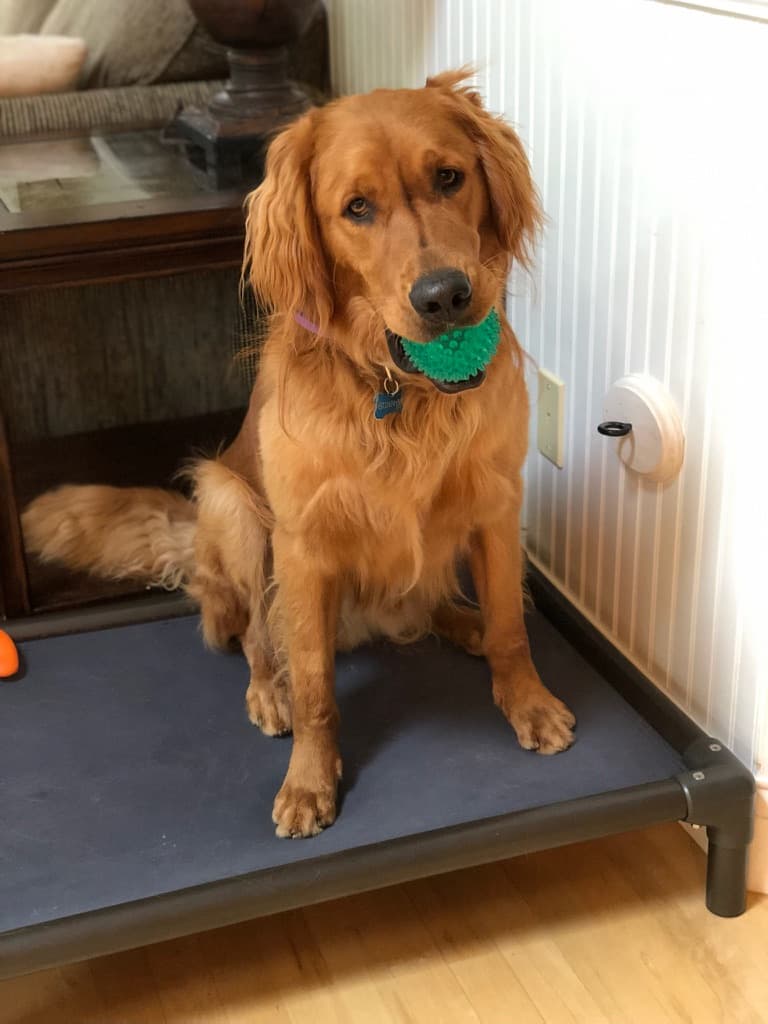
We love this breed enough to be honest
I do not think the Golden Retriever is a lost cause. I think the breed is in a moment where honesty is more useful than cheerleading.
We have better tools than we used to: OFA databases, DNA tests for the diseases that actually have tests, genomic COI, pedigree databases if people will record longevity, the Golden Retriever Lifetime Study, and breeders willing to say how a dog died. None of that works if we only use it to decorate the dogs we already wanted to breed.
The goal should not be producing beautiful Goldens, red Goldens, cream Goldens, field Goldens, show Goldens, or high-drive Goldens as a brand. Those labels are fine as descriptions. They are a thin ambition for a breed. The goal should be a healthy, functional, mentally stable Golden Retriever that still looks like the dog the breed was created to be. That dog can hunt or not hunt. It should be able to live with people. It should have a body that works. It should come from a gene pool that is wider than a handful of famous males.
We love this breed enough to be honest about where we need to do better. Loving it is the easy part. Telling the truth is how we keep something worth loving.