
When I wrote Things I Hate About Golden Retrievers, cancer was first on the list.
It was also what I heard the most about afterward. Some of you wanted to know what the research says. Others wanted to know what you could do to protect your own dogs. And so many of you shared stories about Goldens you'd lost.
I wish I had better answers.
This week, we lost Reya, one of the foundation dogs of our breeding program. She was just shy of eleven and had spent the last two years enjoying retirement with a wonderful family who loved her dearly. Her sudden loss was most likely hemangiosarcoma, the same devastating cancer that took our Birdie.
It's heartbreaking how quickly things can change.
As a breeder, cancer is something I think about constantly. Not just because of the dogs we've loved and lost, but because of the puppies we bring into the world and the families who will love them.
I've spent a lot of time reading about cancer in Golden Retrievers, particularly the research on genetics, prevention, early detection, and integrative medicine. Some of what I've found is encouraging. Some of it is heartbreaking. And there's still an awful lot we don't know.
I wanted to put what I've learned in one place, along with some practical things we can actually do for our dogs.
How Common Is Cancer in Golden Retrievers?
You've probably heard that 60% of Golden Retrievers die of cancer.
That number gets repeated everywhere, but the truth is a little more complicated.
A 2018 study of 652 Golden Retrievers that underwent necropsy at a U.S. veterinary teaching hospital found that 65% died of cancer. That's alarming, but it doesn't necessarily represent all Golden Retrievers. Other studies, particularly from the U.K. and Scandinavia, have reported considerably lower numbers, around 20–39%.
There are several possible explanations, including genetics, differences in the dogs studied, and how causes of death were recorded.
Because we raise field-bred Golden Retrievers, I've also wondered whether field lines have lower cancer rates than show lines.
I'd love to tell you they do. But I haven't found reliable published research directly comparing the two. Until we have that information, I don't think it's fair to make that claim.
One of our best resources is the Morris Animal Foundation's Golden Retriever Lifetime Study. Researchers have been following more than 3,000 Goldens since 2012, collecting health information and samples throughout their lives.
Hemangiosarcoma has emerged as one of the biggest concerns. It's also the cancer that has hit particularly close to home for us.
The Four Cancers Every Golden Retriever Owner Should Know About
Hemangiosarcoma is an aggressive cancer that develops from blood vessel cells, often affecting the spleen or heart. It's particularly devastating because dogs can show very few symptoms before a tumor ruptures and causes internal bleeding. Weakness, collapse, pale gums, and a swollen abdomen can all be emergency warning signs.
We've lost Birdie to this cancer, and we suspect it also took Reya. It's difficult to describe how shocking it is when a dog who's seemingly doing well is suddenly gone.

Lymphoma affects the lymphatic system. Swollen lymph nodes, particularly around the neck, shoulders, or behind the knees, are often one of the first signs. Some dogs otherwise seem perfectly healthy.
Osteosarcoma is an aggressive bone cancer that commonly affects larger dogs. Persistent limping, swelling, or unexplained pain should always be checked.
Mast cell tumors are skin tumors that can look like almost anything, including a harmless fatty lump or insect bite. You can't reliably identify one by appearance or touch alone.
These aren't the only cancers that affect Goldens, but they're important ones to recognize.
What Can Breeders Actually Do About Cancer?
This is one of the most frustrating parts of breeding Golden Retrievers.
We can test hips, elbows, hearts, and eyes. We can run genetic panels and carefully select breeding pairs. But we don't currently have a validated genetic test that can tell us whether a Golden will develop cancer.
Researchers have identified genetic regions associated with hemangiosarcoma and lymphoma, but some risk variants are already widespread throughout the breed.
Cancer also isn't typically inherited in the straightforward way that some single-gene disorders are. Multiple genes, age, environmental exposures, and plain chance may all play a part.
So what can we do?
Pay attention to longevity. Keep track of what dogs in our pedigrees die from, not just what they were tested for at two years old. Avoid overusing individual sires. Protect genetic diversity. Be willing to make difficult breeding decisions when patterns emerge.
And stay in touch with puppy families.
Learning that a dog developed cancer at ten or eleven years old is still valuable information to a breeding program, even if that dog hasn't been involved in breeding for years.
We've also been spending a lot of time studying European Golden Retriever bloodlines and considering whether bringing some into our program could be beneficial.
One reason is genetic diversity. Research involving more than 9,000 Golden Retriever pedigrees found that dogs with higher levels of inbreeding tended to have shorter lifespans.
That doesn't mean a European Golden is automatically healthier, or that bringing one into our program will lower cancer risk. We still need to look closely at individual pedigrees, health testing, longevity, and causes of death.
But I do think it's worth looking beyond the bloodlines we've traditionally worked with, especially if we can do that while preserving the temperament, athleticism, and working ability we love about our dogs.
I wish we could promise families cancer-free puppies. We can't.
But we can keep learning, asking questions, and making the most thoughtful decisions possible with the information we have.
Does Spaying or Neutering Affect Cancer Risk?
This is one of the areas where Golden-specific research has given us something important to consider.
UC Davis researchers studied the relationship between spay/neuter timing, joint disorders, and certain cancers.
In a 2013 study, males neutered before one year of age had approximately three times the rate of lymphoma compared with intact males. Females spayed after one year had roughly four times the rate of hemangiosarcoma compared with intact females.
A follow-up study in 2020 suggested waiting until after one year of age to neuter male Goldens. For females, the researchers suggested either leaving them intact or considering spaying around one year of age while remaining watchful for cancer. Those recommendations came from observational findings, so they should be weighed alongside the risks of keeping a female intact, including pyometra.
They found associations, not proof that altering a dog's hormones directly caused or prevented cancer. There are also reproductive management considerations and the risk of accidental litters.
Some owners choose hormone-preserving options, including ovary-sparing spays or vasectomies, although long-term outcome data are still limited.
My takeaway is that spaying and neutering shouldn't be an automatic, one-size-fits-all decision, especially in Golden Retrievers. It's worth discussing the options, timing, and individual risks with your veterinarian.
What Can We Do to Reduce Cancer Risk?
This is probably the section most owners are looking for.
Unfortunately, there's no proven formula for preventing cancer. But there are several things I think deserve our attention.
Keep Them Lean and Active
If there's one thing I wish every Golden Retriever owner would prioritize, it's maintaining a healthy body condition.
You should be able to feel your dog's ribs easily and see a defined waist. Extra weight puts stress on joints and affects metabolism and overall health.
There's growing interest in how obesity, inflammation, and metabolic health may influence cancer, but we don't yet know how much maintaining a lean body condition changes cancer risk in Goldens.
Even so, keeping our dogs fit is one of the most worthwhile things we can do for their general health.
And these are sporting dogs. They were bred to move, retrieve, swim, and work. I think giving them opportunities to use their bodies and minds is an important part of keeping them healthy.
Be Thoughtful About Environmental Exposures
This is an area that interests me because it's something we have at least some control over.
A 2026 study looked at environmental chemical exposures in Golden Retrievers with and without lymphoma.
Researchers found evidence of secondhand-smoke exposure in six of thirty dogs with lymphoma, compared with none of the thirty healthy controls. They also measured several other chemical exposures, although they didn't find significant differences between the groups.
That doesn't establish that tobacco smoke or those other chemicals caused lymphoma. But it does raise questions worth studying further.
Personally, I think it makes sense to reduce unnecessary exposure to tobacco smoke, harsh solvents, pesticides, and similar chemicals where practical.
That doesn't mean becoming afraid of everything our dogs encounter. It means paying attention to their environment and making reasonable choices.
Feed a Nutritious, Balanced Diet
Nutrition is another area I feel strongly about.
Food affects so many aspects of health, including body composition, immune function, digestion, and the ability to recover from illness.
But we don't currently have evidence that a specific diet prevents cancer in Golden Retrievers.
I'm interested in fresh, thoughtfully prepared foods and good-quality ingredients, but nutritional completeness matters far more than whether a diet is marketed as natural, fresh, or holistic.
If you're feeding a home-prepared diet, make sure it's properly balanced with guidance from someone qualified in veterinary nutrition.
And don't feel like you have to buy every supplement or superfood advertised as cancer-fighting.
I haven't found evidence that any single food can protect our Goldens from this disease.
Early Detection: Can We Catch Cancer Before It's Too Late?
This question is particularly personal for me.
With hemangiosarcoma, dogs can appear healthy right up until a tumor bleeds. It's one of the things that makes this cancer so devastating.
So is there anything we can do?
First, get familiar with your dog's body. Feel for lumps, swelling, and anything unusual. If something new appears, have your veterinarian check it. A fine-needle aspirate can help identify many types of masses, although some need additional testing.
As Goldens get older, I also think it's worth discussing more frequent wellness visits, perhaps twice a year beginning around age six or seven.
Routine bloodwork is useful for assessing general health, but it isn't a reliable cancer screening test by itself.
Abdominal ultrasounds may help identify certain internal masses, particularly in older dogs or those with concerning symptoms. But hemangiosarcoma can develop quickly, and a normal scan doesn't guarantee that a dog won't develop cancer soon afterward.
What About Cancer Blood Tests?
This is one of the developments I'm most interested in.
Tests such as OncoK9 and Nu.Q Vet look for signals in blood that may indicate certain cancers.
A 2022 validation study found that OncoK9 detected approximately 55% of cancers overall, with better detection rates for some aggressive cancers.
In a 2026 study involving predominantly higher-risk dogs, OncoK9 detected approximately 57% of the cancers identified during the interim analysis. Adding the test to routine veterinary care increased the proportion of cancers detected before clinical signs appeared. That's encouraging, but we still don't know whether routine screening helps dogs live longer, and the test can miss cancers.
Another blood test, Nu.Q Vet, has also shown promise. In a 2022 study, it detected approximately half of the cancers evaluated, with better detection rates for certain cancer types. Like OncoK9, it isn't a definitive cancer test, and a negative result doesn't rule out cancer.
A positive result may lead to additional imaging or diagnostic testing, and it doesn't necessarily mean cancer will be found.
These tests are also an additional expense, and follow-up testing can be costly.
I think they're worth discussing with your veterinarian, particularly as your Golden gets older, but I wouldn't consider a negative result reassurance that a dog is cancer-free.
When Cancer Is Diagnosed
A cancer diagnosis can leave you feeling like you need to make enormous decisions almost immediately.
Depending on the cancer, treatment might involve surgery, chemotherapy, radiation, targeted medications, or a combination of approaches.
One thing I think is important to understand is that veterinary chemotherapy is generally approached differently than human chemotherapy. Quality of life is a major priority, and many dogs tolerate treatment reasonably well.
For example, published studies have reported median survival times around ten months for dogs with lymphoma receiving certain chemotherapy protocols. Dogs with osteosarcoma treated with amputation and chemotherapy have had median survival times around nine months in some studies.
Hemangiosarcoma is particularly difficult. Even with surgery and chemotherapy, survival is often measured in months.
These are study averages, not predictions for an individual dog.
If your dog is diagnosed with cancer, I would encourage you to at least understand the available options, including an oncology consultation. Even if you ultimately choose comfort care rather than aggressive treatment, having good information can make a difficult decision easier.
Integrative Cancer Care: Looking at the Whole Dog
This is an area I'm particularly interested in.
I've always been drawn to a holistic approach to health, both for our family and for our dogs. And when it comes to cancer, I don't think care should be limited to treating a tumor.
Nutrition, comfort, pain, appetite, mobility, and emotional well-being matter too.
I don't believe conventional medicine and integrative medicine need to be at odds. Ideally, they should work together.
There are natural therapies with interesting early research behind them, and there are others that have been used for years without much formal study.
I'm open to exploring those possibilities. But I also want to understand what the research actually shows, rather than assuming something works simply because it's natural.
A few approaches are particularly interesting.
Turkey Tail Mushrooms
Turkey tail is one of the natural products that has received attention in canine cancer research, especially for hemangiosarcoma.
A small 2012 University of Pennsylvania study looked at a standardized turkey tail extract containing polysaccharopeptide, or PSP.
Dogs receiving the highest dose had a median survival of 199 days after surgery for splenic hemangiosarcoma.
Given how aggressive this cancer is, those findings were exciting.
But the study was very small and didn't include a placebo comparison group.
A larger study published in 2022 found that adding PSP to chemotherapy didn't improve survival. There was also a concerning finding: female dogs receiving PSP alone had worse survival than females receiving chemotherapy.
I still think turkey tail deserves further study. But we can't say it's been proven to extend survival, and commercially available mushroom supplements aren't necessarily equivalent to the standardized extract used in research.
It's something I'd discuss with a veterinary oncologist rather than using in place of treatment.
Yunnan Baiyao
Yunnan Baiyao is a traditional Chinese herbal formula that some veterinarians use as supportive care for dogs with bleeding tumors, including hemangiosarcoma.
Laboratory studies have found effects on canine hemangiosarcoma cells, which is interesting.
Unfortunately, laboratory findings don't always translate into meaningful benefits for living animals.
A small clinical study involving dogs with right atrial masses and fluid around the heart didn't establish that Yunnan Baiyao improved survival or prevented further bleeding complications.
That doesn't necessarily settle every question about its potential uses, but it means we shouldn't describe it as a proven way to stop bleeding or extend survival.
I can understand why families want to explore it, particularly when treatment options are limited. But it's something I'd want a veterinarian involved in, especially because the full composition of the formula isn't publicly disclosed.
Acupuncture
Acupuncture is another approach some integrative veterinarians use to help manage pain, nausea, and mobility problems.
The evidence specifically in dogs with cancer is limited. It hasn't been shown to treat the cancer itself.
Still, supportive therapies that may help a dog feel more comfortable are worth discussing, provided they're safe and don't delay necessary treatment.
CBD
CBD has attracted a lot of interest in both human and veterinary oncology.
Some laboratory research has found anti-tumor activity in canine cancer cells. And a small 2025 clinical trial found that a CBD/CBDA-rich hemp product was generally well tolerated during chemotherapy for dogs with lymphoma.
That study was primarily about safety. It didn't establish that CBD improved survival or controlled the cancer.
There are also questions about product consistency, dosing, medication interactions, and effects on liver enzymes.
I'm interested to see where the research goes, particularly regarding supportive care, but I wouldn't use CBD as a cancer treatment or add it during chemotherapy without discussing it with the oncology team.
Nutrition and Supplements During Cancer Treatment
I think nutrition deserves a meaningful place in integrative cancer care.
Dogs going through treatment may lose their appetite, struggle with nausea, lose weight, or have difficulty maintaining muscle.
Helping them eat enough and maintain good nutrition can be important for their comfort and strength.
For some dogs, that means adjusting the diet, changing meal frequency, or finding foods they'll actually eat.
Supplements are more complicated.
There are products with promising early research, but there's also a lot we don't know about interactions with chemotherapy and other medications.
High-dose antioxidant supplements are one example. Some cancer treatments depend partly on oxidative processes, raising concerns that certain supplements could interfere with treatment.
We have some concerning findings in human research, although we can't assume the same outcomes apply to dogs.
My preference is to look at the entire treatment plan, including food, medications, and supplements, rather than adding things one at a time without considering how they work together.
Why Isn't There More Research on Natural Treatments?
One thing I've found frustrating is how many potentially interesting natural therapies haven't been studied in large clinical trials.
Research is expensive, and funding matters.
Pharmaceutical companies can often protect their investments through patents. That's more difficult for some naturally occurring compounds, which can make large trials less attractive financially.
There are other challenges, too. Natural products can vary in composition and quality, and promising results in a laboratory don't always translate into effective treatments.
So when someone says a natural therapy hasn't been proven to work, I don't automatically take that to mean it has no potential.
But the opposite is true, too. A lack of research isn't evidence that something works.
I think both points matter.
I value the experience of integrative veterinarians, and I believe observations from families can help identify questions worth studying. At the same time, when we desperately want something to help our dogs, it's easy to see improvement that may not actually be caused by the treatment.
That's why I think tracking real changes matters. Is the dog eating better? Maintaining weight? Moving more comfortably? Having more good days?
For me, the ideal approach is an integrative veterinarian who's willing to work alongside a veterinary oncologist, with everyone aware of the full treatment plan.
I don't want us to have to choose between conventional care and a holistic approach when both can contribute to caring for the whole dog.
When the Goal Becomes Comfort
Sometimes, despite everything we do, the treatment options run out. Or the burden of treatment becomes greater than the benefit.
This is one of the hardest parts of loving animals.
At some point, the question shifts from how much longer we can keep them here to how we can make the time they have left as good as possible.
Good pain control, help with nausea, comfortable places to rest, support for mobility, and time with their people can make a real difference.
Some veterinarians use the HHHHHMM quality-of-life scale to help families evaluate pain, appetite, hydration, hygiene, happiness, mobility, and whether there are more good days than bad.
I've been through these goodbyes more times than I'd like.
And one thing I believe deeply is that our dogs deserve to leave this world peacefully. As hard as it is, I would rather say goodbye a little early than ask a dog I love to endure unnecessary suffering because I'm not ready to let go.
There's rarely a perfect day or a perfect decision.
Just a family doing their best for a dog they love.
Why We Keep Breeding Golden Retrievers
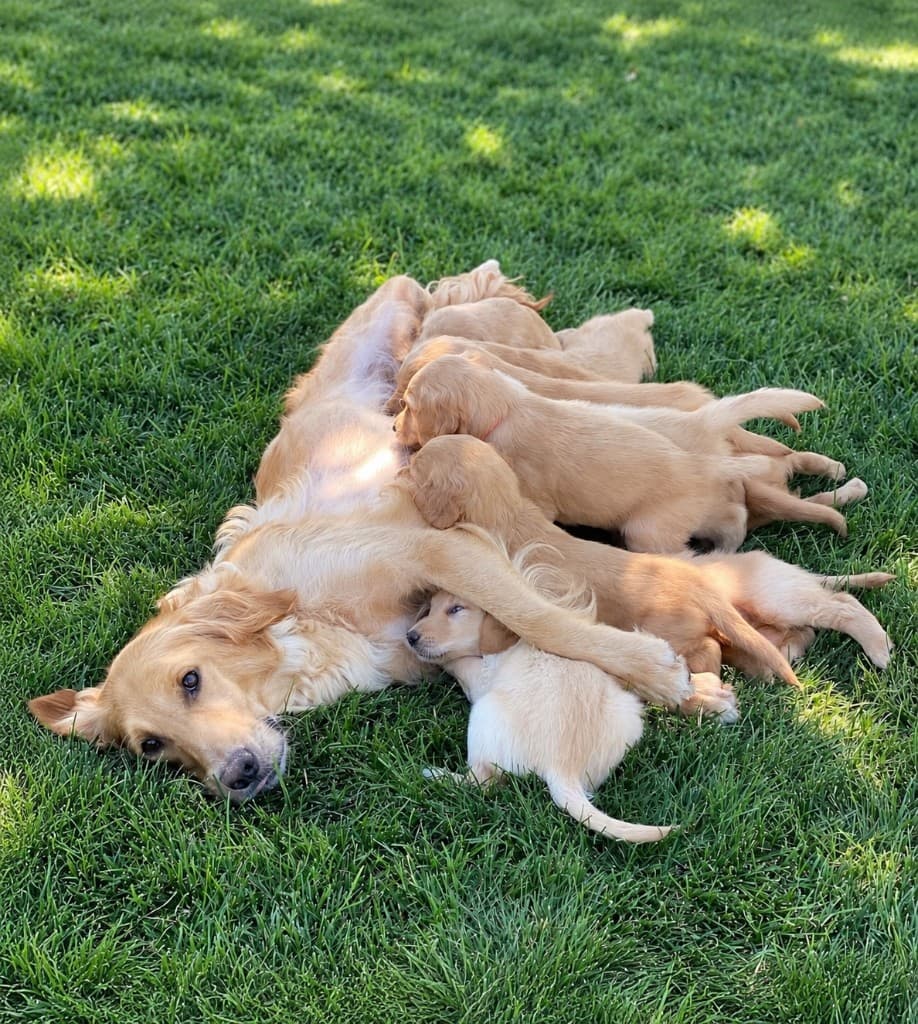
Sometimes I wonder what the future of this breed will look like.
We've lost dogs to cancer that we loved dearly, and we've watched families go through the same heartbreak. It's especially difficult when they've had so little warning.
I've always said that if it weren't for the health problems we deal with in Golden Retrievers, they'd be taken straight to heaven. They're just too good for us here on earth.
And maybe that's part of why losing them is so hard. They give us everything they have, and no matter how many years we get with them, it's never quite enough.
But I don't believe walking away from the breed is the answer. I believe in doing everything we can to make it better. Being thoughtful about the dogs we breed, keeping honest records, learning from the research, and being willing to talk about the difficult things.
I don't expect we'll ever eliminate cancer entirely. But I hope we're moving toward a future where more Golden Retrievers get to live long, healthy lives, and fewer families have to say goodbye too soon.
If you're going through a cancer diagnosis with your Golden right now, my heart is with you. And if your Golden is young and healthy, I hope this article gives you something useful without making you worry about every day ahead.
Because if any dog deserves a little more time here on earth, it's a Golden Retriever.
— Rachel
This article shares research and personal perspectives, not individualized veterinary advice. Please discuss screening, treatments, and supplements with your veterinarian or veterinary oncologist.
References
- Kent et al. (2018). Cancer-related mortality in Golden Retrievers.
- Morris Animal Foundation. Golden Retriever Lifetime Study.
- Hillman et al. (2023). Descriptive analysis of haemangiosarcoma occurrence in dogs enrolled in the Golden Retriever Lifetime Study.
- Tonomura et al. (2015). Shared genetic risk loci for Golden Retriever cancers.
- Yordy et al. (2020). Body size, inbreeding, and lifespan in domestic dogs.
- Torres de la Riva et al. (2013). Neutering, joint disorders, and cancers in Golden Retrievers.
- Hart et al. (2020). Age-of-neutering recommendations for 35 breeds.
- Kutzler (2020). Gonad-sparing surgical sterilization in dogs.
- Tindle et al. (2026). Environmental exposures and lymphoma in Golden Retrievers.
- Flory et al. (2022). CANDiD liquid biopsy validation.
- Wilson-Robles et al. (2022). Plasma nucleosomes as canine cancer markers.
- CLASSiC Study (2026). Prospective cancer screening with liquid biopsy.
- Curran & Thamm (2016). CHOP chemotherapy in canine lymphoma.
- Selmic et al. (2014). Osteosarcoma treatment outcomes.
- Faulhaber et al. (2021). Chemotherapy for splenic hemangiosarcoma.
- Brown & Reetz (2012). Turkey tail PSP pilot study.
- Gedney et al. (2022). Turkey tail PSP and doxorubicin in canine hemangiosarcoma.
- Wirth et al. (2016). Yunnan Baiyao laboratory study.
- Murphy et al. (2017). Yunnan Baiyao in dogs with right atrial masses.
- Medina & Torres (2026). CBD in canine oncology: systematic review.
- Lejeune et al. (2025). CBD/CBDA during canine lymphoma chemotherapy.
- Ambrosone et al. (2020). Antioxidant supplements during human breast cancer chemotherapy.
- Conzemius & Evans (2012). Caregiver placebo effect in dogs.
- Villalobos. Quality-of-life assessment for pets.