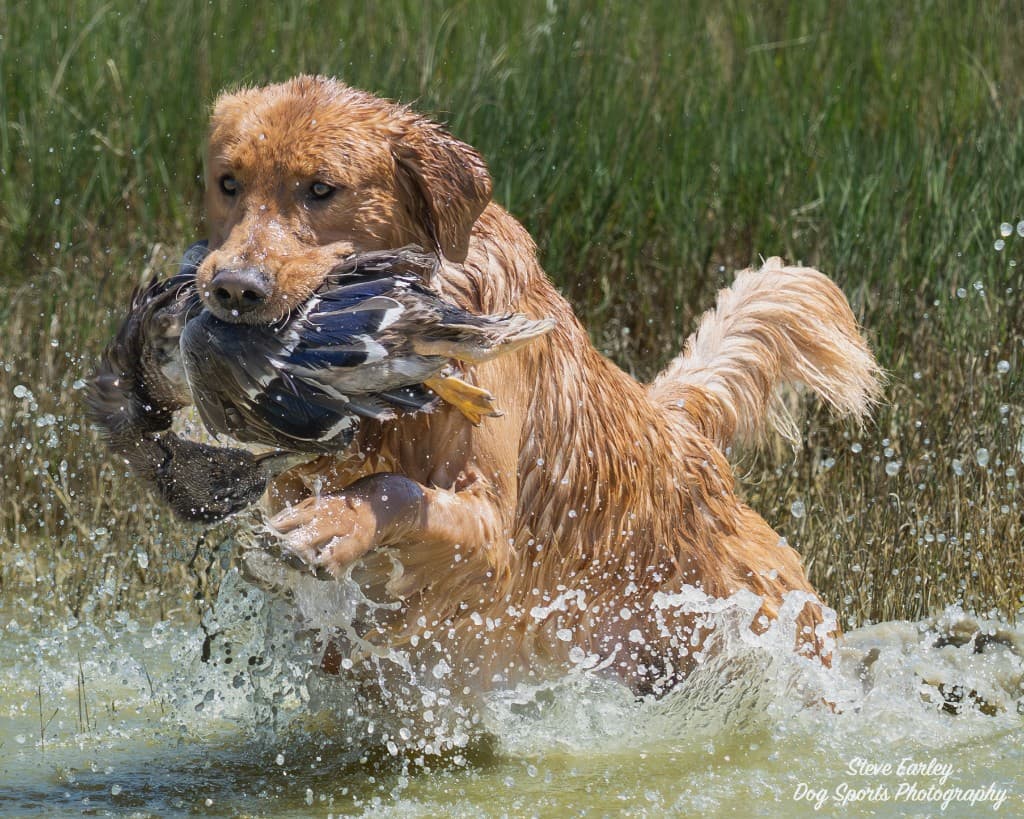
Families usually ask us great questions. Are the parents' hips and hearts checked? What are their temperaments like? How do you raise the puppies? Will this puppy swim in every ditch? (Yes.)
Those questions matter. But one more belongs on the list, and most people don't know to ask it:
What's the genetic COI of this litter, not just the pedigree COI?
It isn't more important than health clearances, temperament, or how a breeder raises their dogs. It's one important piece alongside them. If it sounds like gibberish, you're in the right place.
What Is COI, in Plain English?
COI (coefficient of inbreeding) measures how much of a puppy's DNA comes in matching pairs inherited from the same ancestor through both mom and dad.
It's a measure of inbreeding in the puppy itself. Pedigree COI estimates the chance of those matching pairs from the family tree. Genetic COI measures how much of the puppy's DNA actually is matched that way.
Think of a deck of cards. Every puppy gets two copies of each card, one from mom and one from dad. If mom and dad share a great-great-grandfather, some of the puppy's pairs can be the very same card, copied down both sides of the family from him. COI is the share of the puppy's pairs that are identical copies like that.
Why do matching pairs matter?
Many inherited conditions are recessive: a puppy is only affected if it gets two copies of the same harmful variant, one from each parent. Every dog quietly carries a few. The more inbred a puppy is, the more of its pairs are matching copies, and the higher the odds that both copies of some gene are the same harmful one. More genetic diversity lowers that chance. For the conditions we can test for, DNA tests let us go further and pair carriers with clear dogs.
Geneticist Sewall Wright published the math behind COI in 1922 (Wright, 1922). Breeders already knew that pairing close relatives made animals more uniform but less vigorous, and Wright gave them a way to measure it (Institute of Canine Biology).
Why Are Purebred Dogs Inbred at All?
Once a breed is official, its stud book (the registry of who counts as a purebred Golden) is closed. No outside dogs come in. Every Golden today descends from a fairly small group of early dogs.
Then there's the popular sire effect: when a male wins a lot, everybody wants his puppies, and his genes fill the next generation. Researchers have found both of these pushing inbreeding up in Goldens (Dreger et al., 2016).
So every Golden is a little related to every other Golden. The question is how much.
Does It Actually Affect Health?
Yes, though it's one piece of the picture, not the whole thing.
A large UC Davis study compared genomic inbreeding with Swedish pet-insurance records for more than 160 breeds. Breeds with average genomic inbreeding above 25% had about 29% more non-routine vet care events than mixed-breed dogs (Bannasch et al., 2021). That's a breed-level pattern, not a prediction for any individual Golden. Body size mattered even more than inbreeding, and the researchers call for more work on individual dogs.
In Goldens specifically, more inbred mothers tend to have smaller litters (Chu et al., 2019).
COI is a measure of risk, not a health report card. A higher-COI Golden can still live a long, happy life. It just tilts the odds.
Pedigree COI or Genetic COI: What's the Difference?
This surprised us most. There are two ways to measure COI, and in Goldens they can disagree wildly.
Pedigree COI is the paper family tree. It's calculated from registered ancestors, usually 10 or 12 generations back. Free databases like k9data do the math.
Genetic COI is the actual DNA. A cheek-swab test like Embark reads the dog's genes directly and measures how much of them really came in matching pairs from shared ancestors (Embark). Embark has offered it since 2015 (Cornell Chronicle).
Meet Ticket
Our boy Ticket is the best example I have.
Same dog. Two very different numbers.
Ticket's Pedigree COI
2.06%
12 generations
1.38% at 10 generations
Ticket's Genetic COI
18%
Embark DNA
These figures come from two different measurement methods, not contradictory results from the same calculation. Nothing is wrong with Ticket; 18% is normal for a Golden like him. The paper tree just can't see far enough back.
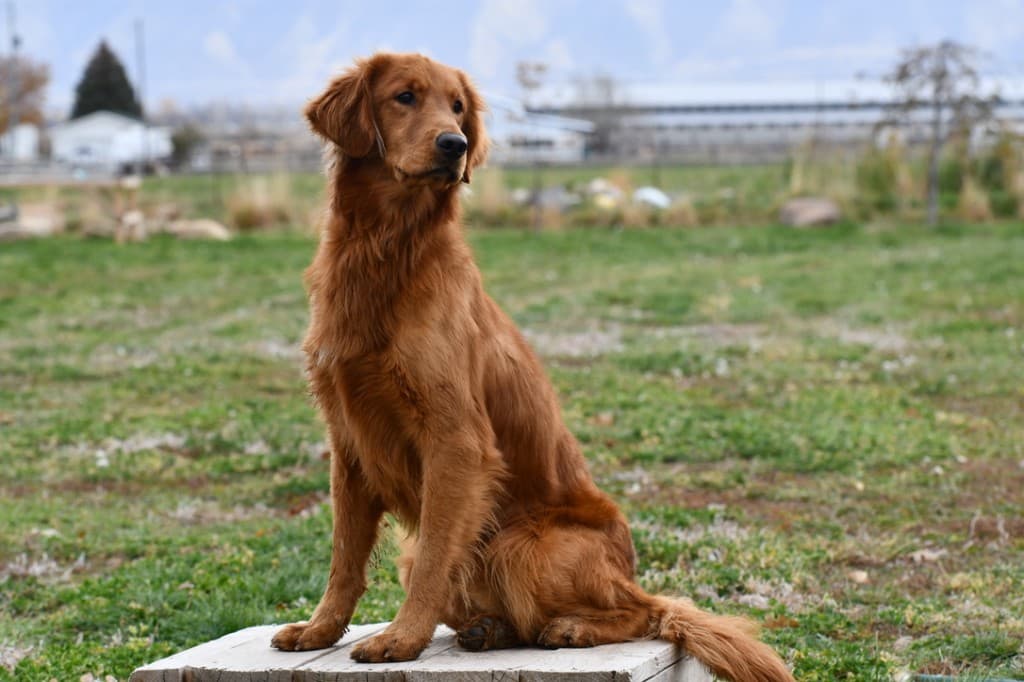
His paper family tree says 1.38% at 10 generations and 2.06% at 12. That looks wonderfully low. His actual DNA says 18%. Same dog, two very different numbers.
Why Doesn't the Paper Tree Match the DNA?
It doesn't go back far enough. Twelve generations sounds like a lot, but a UC Davis team pointed out it doesn't even reach the dogs the breed was built from (Ontiveros et al., 2019).
It assumes the oldest dogs were strangers. The math treats the earliest dogs as unrelated. In a breed built from a small group, they rarely were (Embark).
Genes don't split perfectly. The deck gets shuffled unevenly, and only a DNA test sees how it actually landed.
For perspective, the typical Golden tested by Embark has a genetic COI of about 20% (Embark Golden Retriever report, 2020).
What About a "Stacked" Pedigree?
A low pedigree COI is what most breeders point to. As Ticket shows, it doesn't tell the full story.
In the field world, we have a second favorite brag: the "stacked" pedigree, packed with FCs, AFCs, and MHs (field champion, amateur field champion, and Master Hunter titles). Those titles mean real accomplishment. But titles and pedigree depth alone can't tell you how genetically diverse a dog is. When the same famous dogs show up again and again, that may raise inbreeding. A stacked pedigree doesn't necessarily mean a high genetic COI, though. The only way to know is the DNA.
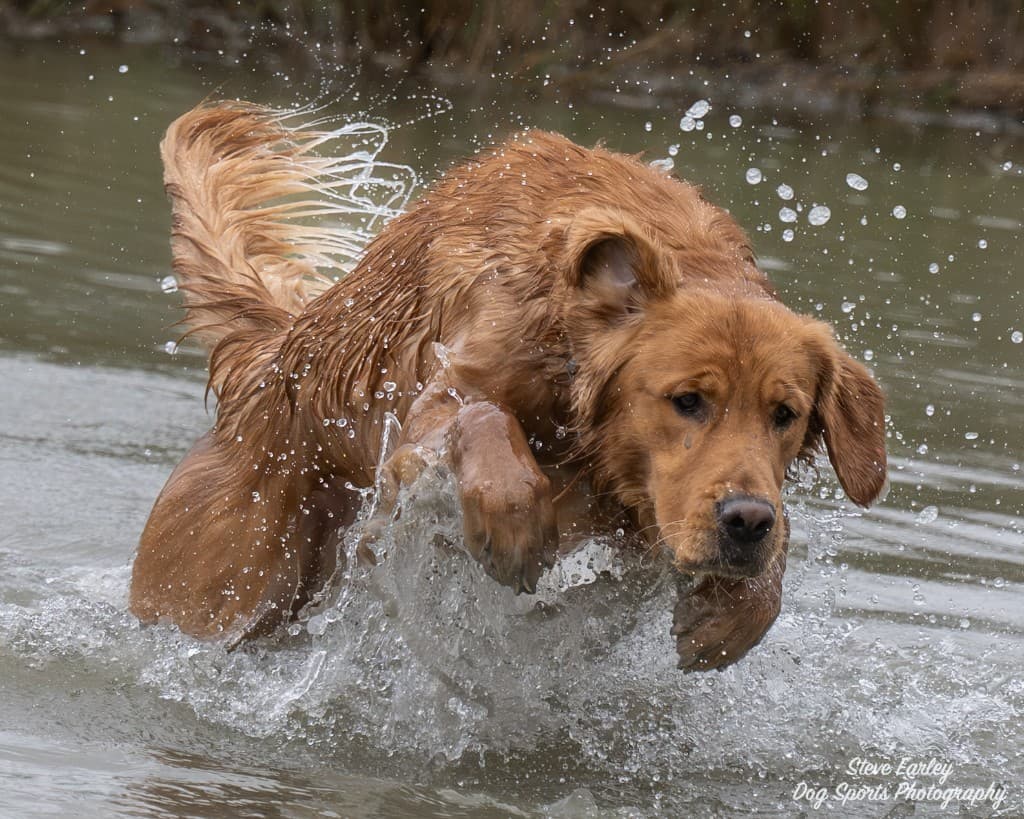
Take High Point Riggs JH, a young dog Tyce is training. One side of his paper pedigree is fairly unremarkable. But between his other side and what Tyce sees in training, we know what he is. He has a great temperament and real ability, is doing advanced handling work, and is working toward his Master Hunter title. He's not there yet.
What he does have: a k9data pedigree COI of 0.08% at 12 generations, full health clearances (hips Good; elbows, eyes, and heart normal), and predicted litters with our girls around 16–20%, lower than the proven US field sires we checked.
So a less famous pedigree can actually be a gift for diversity, as long as the dog himself proves it in the field.
What Are We Seeing in Our Own Dogs?
These are our own numbers, not breed statistics. Our ten tested US field dogs average about 20%, right at the breed's typical number. Here's what we found looking for mates:
FBGR's predicted litter results with our own females
Proven US field sires
About 21–23%
Very low on paper; the DNA disagreed.
Riggs (young US field dog)
About 16–20%
Still proving himself in the field.
European working-line sire (potential pairing evaluated, not yet used)
About 14–15%
Predicted from a potential pairing we evaluated. Individual DNA confirmed the genetic distance. Not every European dog will land here.
Show and pet lines
About 9–12%
Distant from field lines, but not what we breed for.
These are pairing predictions for our own females, not breed-wide averages or universal outcomes.
What Else Matters Besides COI?
COI is one line on a long checklist. Here's the rest.
Immune-system genes (DLA). DLA stands for dog leukocyte antigen. These genes help the immune system tell the body's own cells from germs. A puppy who gets two different versions, one from each parent, has more variety to work with (Embark Help). Goldens have lost a lot of variety here (Ontiveros et al., 2019). Science is still sorting out how much it matters, so it's one clue, not a verdict.
Carrier results. A carrier is a dog with one copy of a gene for an inherited condition but no symptoms. Goldens are tested for several, like the skin condition ichthyosis and some inherited blindness.
Here's the important part: a carrier is not a bad dog. If you breed a carrier to a dog who's "clear" (has no copies), none of the puppies will be affected (Embark Help). The Golden Retriever Club of America encourages using DNA tests to avoid affected puppies "while at the same time maintaining genetic diversity" (GRCA). Cutting every carrier would shrink the gene pool.
Hips, elbows, heart, and eyes. DNA can't check these. They need X-rays and specialist exams, which GRCA recommends for every breeding Golden (GRCA). We do all of them.
Temperament and working ability. A low COI never makes up for a nervous dog or one that doesn't want to work.
So Why Not Just Breed for the Lowest COI?
Because genetic diversity is important, but it isn't the only thing that makes a great Golden Retriever.
Our goal has always been to produce healthy, athletic dogs with strong natural hunting instincts, excellent trainability, and the kind of temperament that makes them wonderful family companions.
If we focused entirely on finding the lowest possible COI, we could lose some of the very qualities we're working so hard to preserve.
Staying with American Field Lines
American field-bred Goldens have the drive, trainability, and love of birds that we value so much. But it's a relatively small breeding population, and many of the top dogs share some of the same influential ancestors.
We've found that even pairings with very low pedigree COIs can produce surprisingly high predicted genetic COIs. Simply choosing an unrelated-looking pedigree isn't always enough to improve genetic diversity.
Show and Pet Lines
Interestingly, some of the lowest predicted COIs we've found come from pairing our field Goldens with dogs from American and European show lines.
That's not necessarily because those dogs are individually less inbred. It's because show and field lines have been bred toward different goals for generations, creating genetic differences between the populations.
But our goal isn't simply to produce a Golden Retriever with the lowest possible number. We're preserving the natural hunting ability, athleticism, resilience, and trainability that define our field-bred Goldens.
We have a great deal of respect for breeders working toward different goals. Those dogs can be wonderful companions. They're simply not the direction we want to take our program.
Exploring European Working and Field-Trial Lines
This is one of the most promising opportunities we've found so far.
Golden Retrievers have been developed for field work in countries like the UK and Italy for generations, somewhat separately from American field lines.
When we've explored potential pairings with European working-line sires, some have produced predicted genetic COIs around 14–15% with our females. That's a meaningful improvement over many of the American field pairings we've evaluated, while potentially preserving the working characteristics we value.
We haven't used European working-line sires in our breeding program yet, but we're actively exploring that possibility.
Using chilled or frozen semen could give us access to working dogs we otherwise wouldn't be able to breed to.
Of course, being from Europe doesn't automatically make a dog more genetically diverse or a good match for our program. We'd still evaluate each potential sire based on genetic compatibility, health testing, proven working ability, temperament, and what he's produced.
It's an exciting possibility, and one we're taking seriously as we consider the future of our breeding program.
The Honest Truth: Not Every Litter Is Optimized for COI
I'll be honest with you. This is hard.
Every pairing is a tradeoff. At the end of the day, our job is to produce dogs who can do the work and have the temperament our families love: steady, biddable, happy to hunt all morning and then curl up on the couch. Sometimes two dogs who won't lower COI much are going to produce incredible puppies, and I'm not going to pass on that for a slightly better number.
Our planned Coral × Rusty litter is a good example. Rusty is a Master National qualifier in 2025 and 2026. He has his MH and WCX titles and full health clearances. On Embark, this pairing won't move genetic COI down much compared with the parents. It's still one of the pairings we're most excited about, because of what both dogs bring: drive, brains, and the kind of temperament you want living in your house.
I'd rather say that plainly than pretend every litter is a science project.
Why Does Our Training Matter?
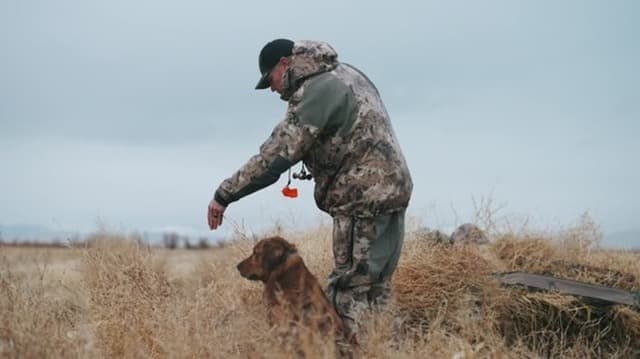
This is the part of our program I'm proudest of. Tyce does much of the training himself, on our breeding dogs and the young dogs we're considering. So we don't have to take drive, temperament, trainability, or field ability on faith from a pedigree. We see it firsthand: how a dog handles pressure, learns, and settles at home.
That's what lets us choose genetically diverse dogs with confidence. Riggs may not have famous names on both sides, but we know who he is because we've watched him work.
What Is FBGR Doing About It?
Here's our standard: "Our goal is to produce litters with a genetic COI below the average of their parents whenever possible, while also working toward greater diversity than what's typical for the breed. That isn't always possible with every pairing, and we don't make breeding decisions based on COI alone."
How we put it into practice:
- ✦Embark on every breeding dog, so we can compare real DNA, not just paper.
- ✦A predicted litter COI check before every pairing (Embark).
- ✦We're also researching opportunities to bring in genetically compatible working lines from outside the American field Golden population, including European field-trial lines. Our early pairing comparisons are promising, but any future decisions will still depend on the individual dog's health, temperament, genetic compatibility, and proven working ability.
- ✦Less famous dogs like Riggs, evaluated firsthand in training.
- ✦Great carriers stay in the program, paired with clear mates.
What Don't We Know Yet?
Honestly, a lot. Much of the research uses breed averages, DNA companies measure COI a little differently, and nobody can say how many healthy years a lower number buys one dog.
What I'm sure of: the paper family tree isn't the whole story. Ticket taught us that.
Questions to Ask Your Breeder
- What's the genetic COI of this litter, not just the pedigree COI?
- Are both parents DNA tested? Can I see the reports?
- Are either of the parents carriers? How were they paired?
- Do both parents have hip, elbow, heart, and eye clearances?
- How do you balance COI with temperament and working ability?
A good breeder will be glad you asked.
Quick Glossary
- COI (coefficient of inbreeding)
- How much of a puppy's DNA comes in matching pairs inherited from the same ancestor through both parents. Pedigree COI estimates it; genetic COI measures it.
- Pedigree COI
- COI calculated from the paper family tree.
- Genetic COI
- COI measured from the dog's actual DNA.
- Recessive
- A condition that only appears when a puppy gets two copies of the same variant, one from each parent.
- Carrier
- A healthy dog with one copy of a gene for an inherited condition. Bred to a clear dog, it won't produce affected puppies.
- DLA
- Immune-system genes that help the body recognize germs.
- Outcross
- Pairing dogs from lines that are genetically distant from each other.
- Frozen or chilled semen
- How breeders use a sire who lives far away, even across an ocean.
Questions about our dogs' DNA results? Just ask.
— Rachel
Sources
- Wright S. Coefficients of inbreeding and relationship. The American Naturalist. 1922;56(645):330–338. https://doi.org/10.1086/279872
- Beuchat C. COI FAQs: Understanding the coefficient of inbreeding. Institute of Canine Biology. 2015. https://www.instituteofcaninebiology.org/blog/coi-faqs-understanding-the-coefficient-of-inbreeding
- Dreger DL, Rimbault M, Davis BW, Bhatnagar A, Parker HG, Ostrander EA. Whole-genome sequence, SNP chips and pedigree structure: building demographic profiles in domestic dog breeds to optimize genetic-trait mapping. Dis Model Mech. 2016;9(12):1445–1460. https://doi.org/10.1242/dmm.027037
- Friedlander B. Dog DNA startup announces $75M in venture funding. Cornell Chronicle. 2021. https://news.cornell.edu/stories/2021/07/dog-dna-startup-announces-75m-venture-funding
- Embark Veterinary. Genetic Coefficient of Inbreeding (Embark for Breeders). https://embarkvet.com/breeders/genetic-coi/
- Bannasch D, Famula T, Donner J, Anderson H, Honkanen L, Batcher K, Safra N, Thomasy S, Rebhun R. The effect of inbreeding, body size and morphology on health in dog breeds. Canine Medicine and Genetics. 2021;8. https://doi.org/10.1186/s40575-021-00111-4
- Chu ET, Simpson MJ, Diehl K, Page RL, Sams AJ, Boyko AR. Inbreeding depression causes reduced fecundity in Golden Retrievers. Mammalian Genome. 2019;30:166–172. https://doi.org/10.1007/s00335-019-09805-4
- Ontiveros ES, Hughes S, Penedo MCT, Grahn RA, Stern JA. Genetic heterogeneity and diversity of North American golden retrievers using a low density STR marker panel. PLoS One. 2019;14(2):e0212171. https://doi.org/10.1371/journal.pone.0212171 (UC Davis Veterinary Genetics Laboratory collaboration)
- Embark Veterinary. Genetic Analysis Report for Golden Retrievers, April 2020 (hosted by DogWellNet). https://dogwellnet.com/applications/core/interface/file/attachment.php?id=5418
- Embark Veterinary Help Center. What does my dog's MHC diversity mean? https://help.embarkvet.com/hc/en-us/articles/360056639893-What-does-my-dog-s-MHC-diversity-mean
- Embark Veterinary Help Center. What does "At Increased Risk" or "Carrier" in my dog's health results mean? https://help.embarkvet.com/hc/en-us/articles/11328997793819-What-does-At-Increased-Risk-or-Carrier-in-my-dog-s-health-results-mean
- Golden Retriever Club of America. GRCA Code of Ethics. https://grca.org/about-grca/grca-code-of-ethics/