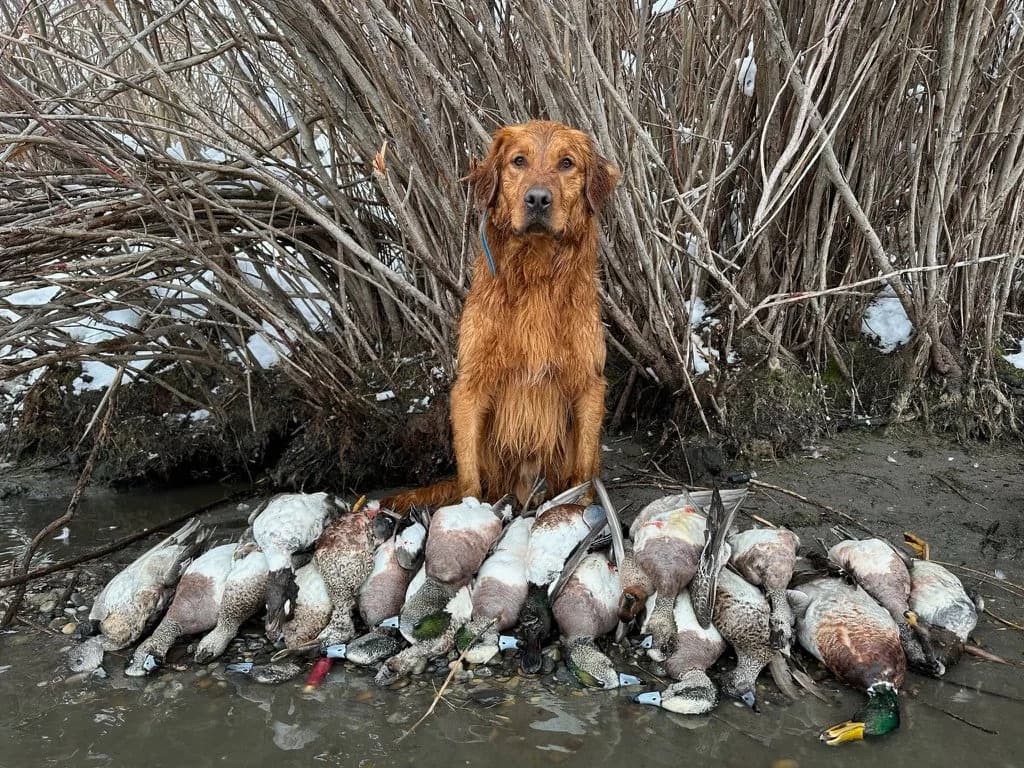
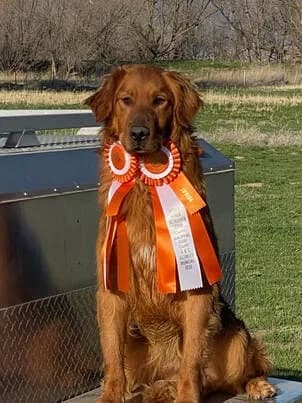
When choosing a retriever, hunt test titles are often used as a measure of quality—and they can provide a useful benchmark for training and control. In our program, however, our priority is how a dog performs in real hunting conditions. We breed for dogs that can handle late-season weather, challenging retrieves, and the unpredictability that comes with real days in the field. Hunt tests play a role in evaluating training, but they do not fully define a dog. Ultimately, the standard is simple: can the dog consistently get the job done when it counts?
What Are Hunt Tests in Retrievers?
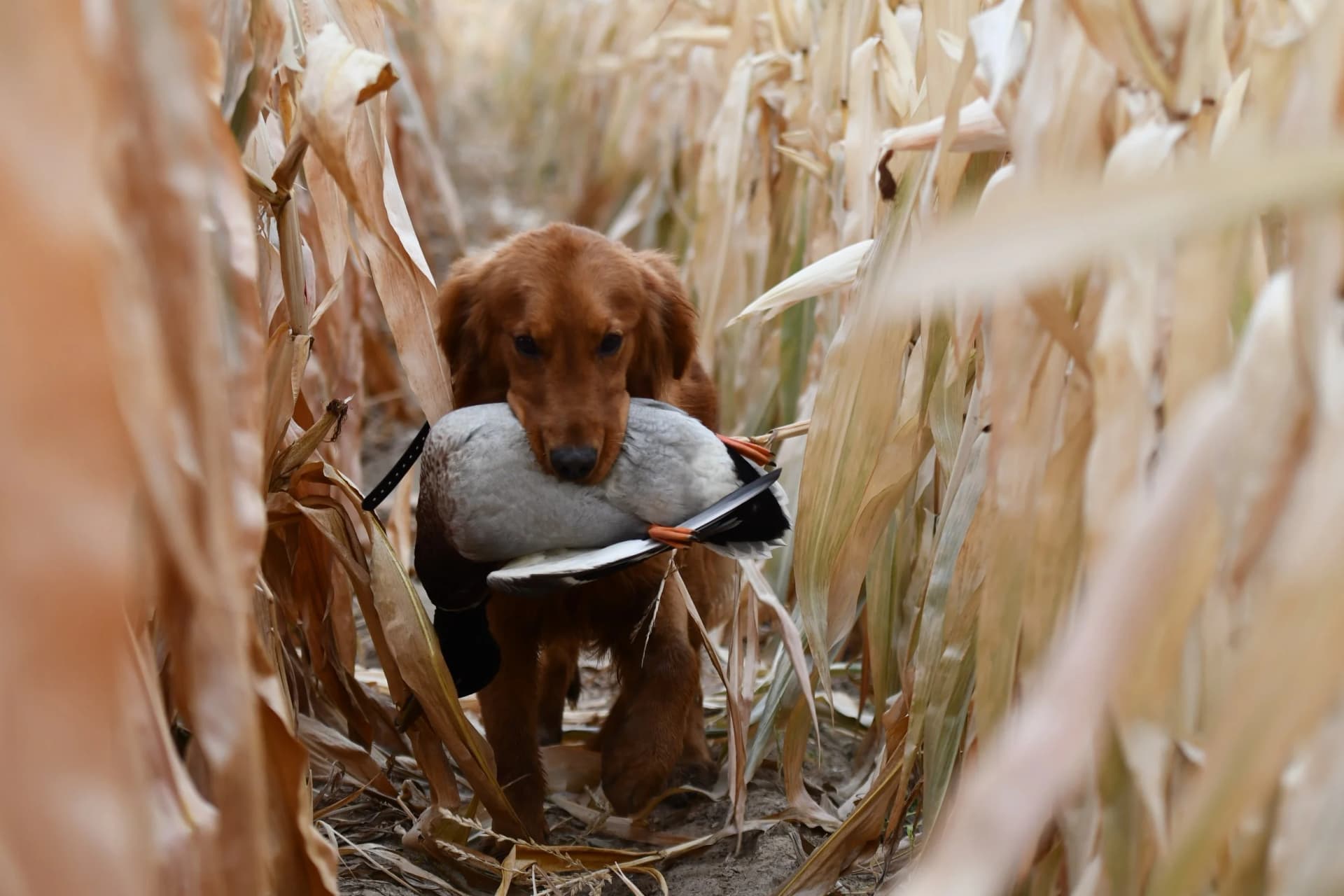
Hunt tests are organized evaluations designed to measure a retriever's ability to perform specific tasks in a controlled environment. Programs such as those offered by the American Kennel Club (AKC) and the Hunting Retriever Club (HRC) provide standardized formats to test skills. These typically include:
- ✦Marked retrieves (the dog sees the bird fall)
- ✦Blind retrieves (the dog is guided to a bird it did not see fall)
- ✦Obedience and steadiness
- ✦Water and land work
These tests are useful for evaluating training progression and consistency.
Where Hunt Tests Are Limited
While valuable, hunt tests are still a controlled evaluation. In most cases, conditions are more predictable, weather is generally moderate, retrieves are set up with intention and visibility in mind, and dogs are working in shorter, more controlled sequences. Because of this, hunt tests cannot fully replicate the variability and pressure of real hunting environments.
What Real Hunting Actually Demands
Real hunting introduces variables that cannot be fully recreated in a test setting. A dependable hunting retriever needs:
- ✦Drive in adverse conditions (cold water, wind, late season)
- ✦Endurance over long hunts and multiple retrieves
- ✦Marking ability in less controlled situations
- ✦The ability to handle blind retrieves when the bird is not seen falling
- ✦Teamwork and trust between dog and handler to work through difficult retrieves
- ✦Willingness to go when conditions are uncomfortable
- ✦Consistency across changing terrain and scenarios
In real hunting, not every bird falls where the dog can mark it. Being able to take direction, trust the handler, and work through a blind retrieve is just as important as marking ability. That level of teamwork—between dog and owner—is what allows birds to be recovered efficiently in challenging situations.
This is something we focus heavily on through our work at Utah Bird Dog Training. Developing a dog that can confidently take direction on a blind retrieve—and a handler who knows how to guide that dog—is a critical part of building a reliable hunting team.
Why Field Performance Matters in Our Program
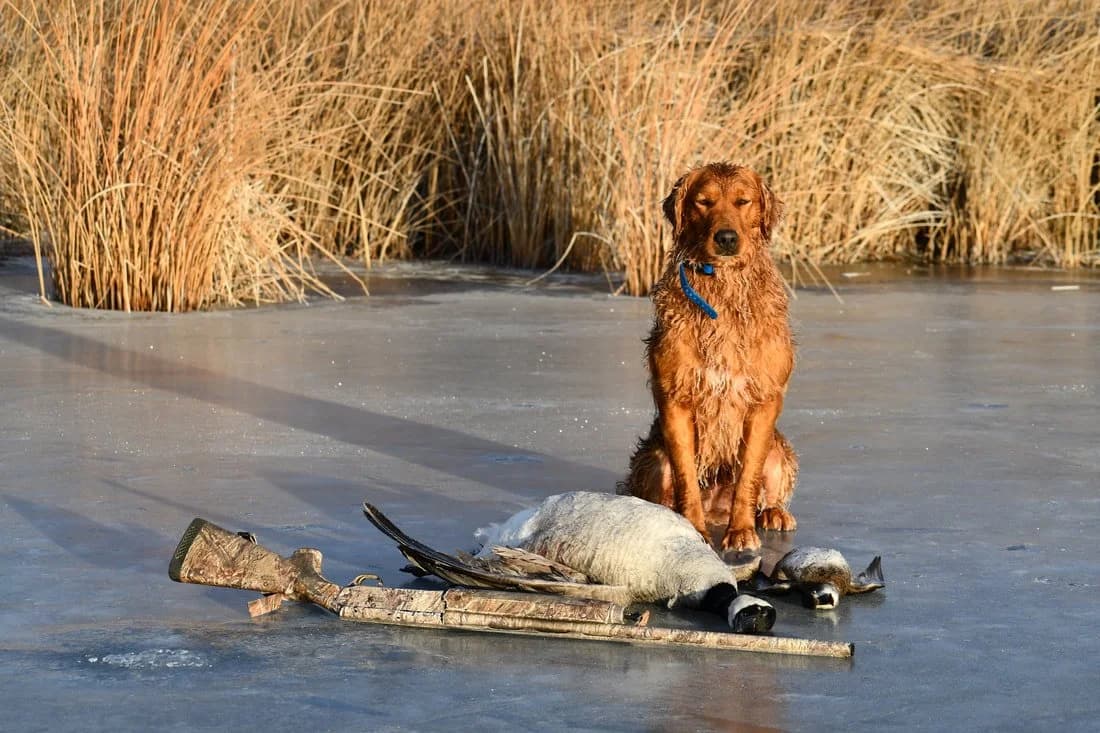
At Field Bred Golden Retrievers, our priority—after health testing—is how our dogs perform in real hunting situations. We hunt with our dogs. Our season includes late-season waterfowl hunts in places like Northern Idaho, where conditions are cold, demanding, and far from controlled. These environments reveal far more about a dog's drive, resilience, and reliability than any staged setup ever could.
A dog that is eager to go pick up a duck in icy water, late in the season, will always carry more weight for us than one that only performs well in ideal conditions. Hunt tests have value, and we use them as a tool within our program. They help develop and measure training. But they are not the final standard.
The standard is simple: can the dog consistently get the job done when it counts?
What This Means for Choosing a Puppy
For most hunting homes, the goal is a dog that performs reliably in the field. When evaluating a litter or breeding program, consider whether the parents are actively hunted, how they perform in real conditions, their temperament and consistency, and their willingness and drive to retrieve. Titles can add context, but they should be considered alongside real-world performance.
Hunt tests are a valuable tool for evaluating training and developing a retriever's skills. However, they do not fully represent the demands of real hunting. A well-rounded dog should be capable in both environments, but for hunters, the most important factor remains consistent performance in the field.